





S T R E T C H
for Managing Workplace Conversations
How non-leaders shape culture through honest communication. This is a 30-minute workshop for secretaries and business office staff — the people who are the connective tissue of every organization. The core idea is simple: you don't need a title to shape your workplace culture. You just need the language.
Jethro Jones, Ed.D.
jethrojones.com
Director of Operations for Life Lab
A Story About a Look
(And what it cost)
Before we get into tools and frameworks, I want to tell you a story. It's about something small — a look — and what happened when nobody had the words to talk about it.
The Look
I gave her a withering look — not at her, but at the situation.
But that’s not what she saw.
My secretary peeked into my office during a tense discipline meeting. I gave her a look — not at her, but at the situation. A withering look that said "this meeting is awful." But that's not what she saw.
She saw disappointment. She saw that she'd done something wrong. For two weeks, the saboteurs whispered to her: "You messed up. He's disappointed in you."
My secretary peeked into my office during a tense discipline meeting.
She saw disappointment. She saw that she'd done something wrong.
For two weeks, the saboteurs whispered: "You messed up. He's disappointed in you."
She had the power to fix this the whole time.
The Storyline
The Saboteur
The Real Cost
She just didn't have the language.
Here's what happened underneath that story. Three things collided, and they collide in your workplaces every single day.
— She invented a narrative based on one look
— That story told her she wasn't good enough
— Anxiety created the mistake she was trying to avoid
She spiraled for two weeks and eventually made a real mistake — one she wouldn't have made if she hadn't been so anxious. All because she didn't have a way to say: "Hey, I think something's off, and I need to check."
YOU ALREADY SHAPE THE CULTURE.
You just might not know it yet.
Here's what I want you to hear: you are not waiting on the sidelines for someone else to fix the culture. You are the culture. Every day. In every hallway conversation, every look you give, every time you choose to say something — or stay quiet.
You're in the hallways. You hear what people actually care about.
You catch tension before it becomes a crisis.
You're the connective tissue of the organization.
Leaders can persuade — but they can’t control. You choose your culture.
Why Honesty Feels Dangerous
If I admit a mistake…
Will they hold it against me?
If I say I’m struggling…
Will they think I can’t handle my job?
If I share my storyline…
Will they think I’m weak or dramatic?
If I push back…
Will I be seen as a problem?
But if it were easy to just speak up, everyone would do it. So let's name what's actually going on. These are the fears that keep us quiet.
These are real fears. I'm not going to pretend they're not. But here's the thing — silence has a cost too. And usually it's bigger than we think.
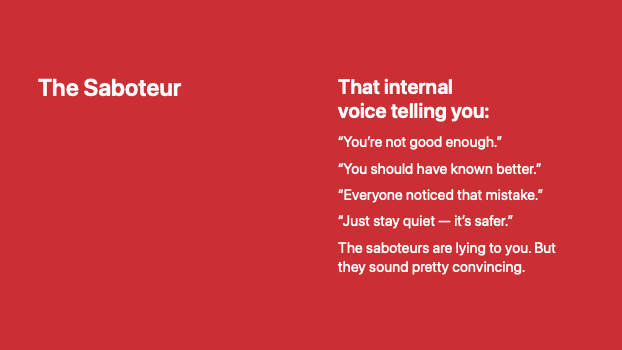
The Saboteur
That internal voice telling you:
“You’re not good enough.”
“You should have known better.”
“Everyone noticed that mistake.”
“Just stay quiet — it’s safer.”
The saboteurs are lying to you. But they sound pretty convincing.
That internal voice. You know the one. It sounds like you, so you believe it. But it's lying.
The saboteur is the voice that takes a look, a tone, a silence — and turns it into a story about how you're failing. My secretary's saboteur told her she'd done something wrong. She hadn't. But the saboteur was so convincing that it changed her behavior anyway.
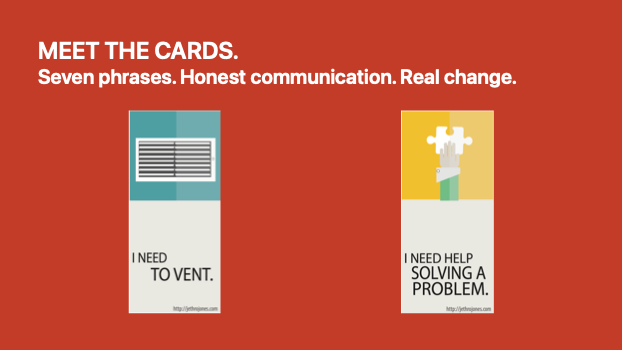
MEET THE CARDS.
Seven phrases. Honest communication. Real change.

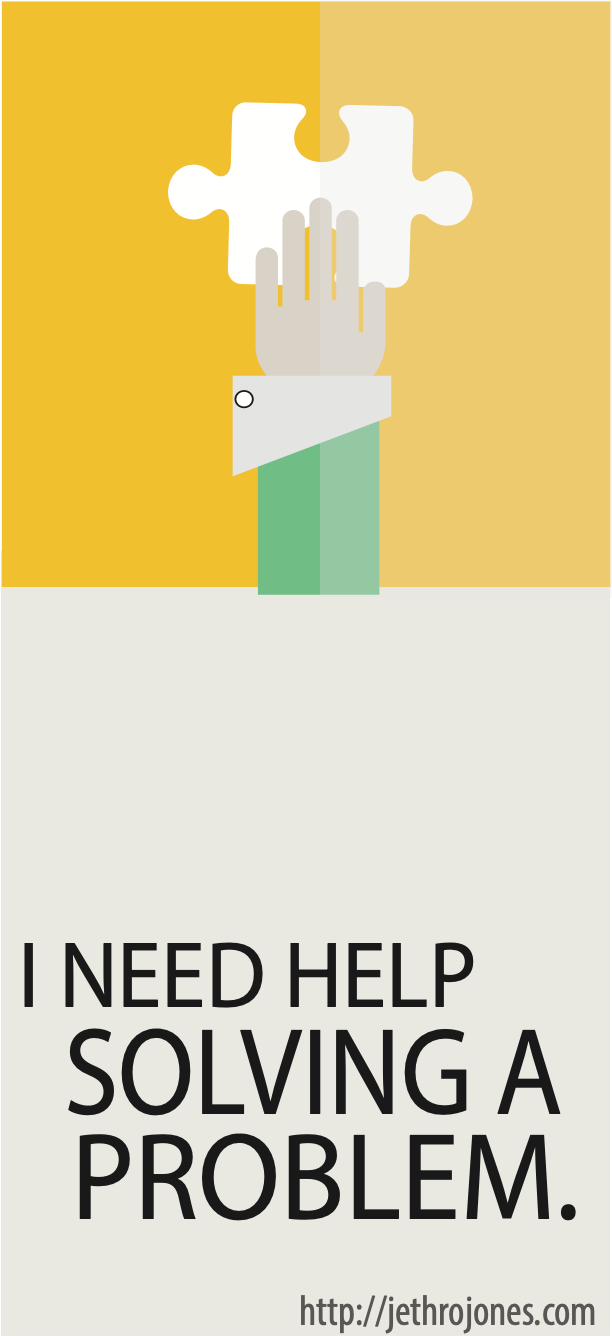
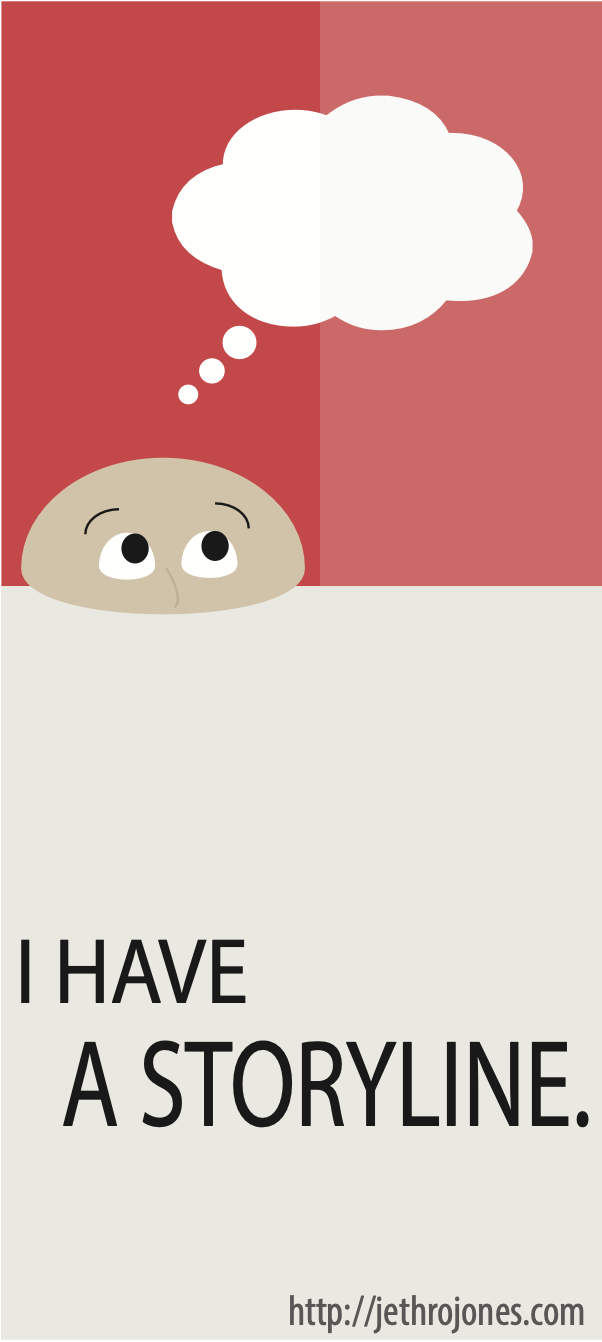
So what's the antidote? Language. Specific, shared language that makes it easier to say the hard thing. I created a set of seven Communication Cards — seven phrases that cover just about every hard conversation you'll ever need to start.




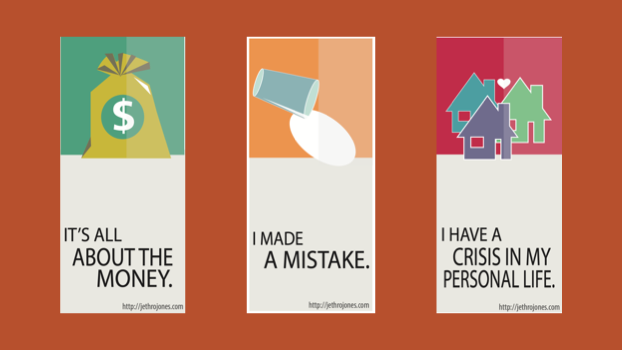
Seven Ways to Say What’s True
- I Want to Brag
- I Made a Mistake
- I Need Help Solving a Problem
- I Have a Storyline
- I Need to Vent
- I Have a Crisis in My Personal Life
- It’s All About the Money
Here they are. Seven cards. Seven phrases. Each one gives you a way to start a conversation you might otherwise avoid.
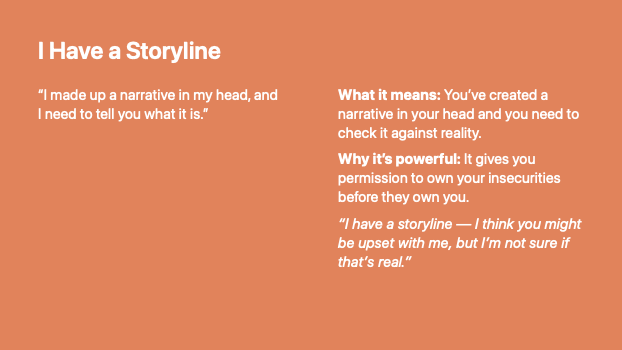
I Have a Storyline
“I made up a narrative in my head, and I need to tell you what it is.”
What it means: You’ve created a narrative in your head and you need to check it against reality.
Why it’s powerful: It gives you permission to own your insecurities before they own you.
“I have a storyline — I think you might be upset with me, but I’m not sure if that’s real.”
This is the card that could have saved my secretary two weeks of anxiety. When you have a storyline, you've invented a narrative — usually based on almost no evidence — and you're treating it like fact. The antidote is to name it.
Instead of letting a look, a silence, or a tone become a two-week spiral, you name it. You bring it into the light. And the saboteur loses its power.
I Made a Mistake
Research shows: the best teams don’t make fewer mistakes — they talk about them more.
When you own a mistake out loud, you:
- Normalize honesty in your workplace
- Give everyone else permission to do the same
- Show that safety matters more than perfection
- You don’t need authority to model courage.
Research from Dr. Amy Edmondson at Harvard shows something surprising: the highest-performing hospital teams didn't make fewer mistakes than others — they just talked about them more. That's psychological safety. And it starts with one person being brave enough to say it first.
You don't need to be the boss to create psychological safety. You just need to go first.
The Full Toolkit
I Want to Brag — Celebrate your wins. Stop hiding good work.
I Need Help Solving a Problem — Vulnerable and actionable. Name the ask.
I Need to Vent — Get it out. Name it. Own the emotion.
I Have a Crisis in My Personal Life — Context matters. People deserve to know.
It’s All About the Money — Financial stress is real. You can say it.
Let me quickly walk you through the other five cards so you have the complete picture.
Each of these cards does the same thing: it removes the awkwardness of starting a hard conversation by giving you the first sentence.
You are the permission giver.
Not the leader. Not HR. Not a policy.
You — by modeling honesty first.
When you say “I have a storyline” — you give everyone around you permission to do the same.
This is the part I really need you to hear. You don't have to wait for your boss to create a safe culture. You don't have to wait for a training or a policy change. When you say "I have a storyline" — you give everyone around you permission to do the same.
How to Use Them — Practically
Use them on yourself first
Model honesty before you expect it from others. Brag. Admit a mistake. Share your storyline. Let people see you do it.
Okay, so how do you actually start? Four simple steps.
Name what you notice in others
When a colleague is struggling, ask: “Hey — does it sound like you have a storyline going?” You give them language.
Display the cards somewhere visible
Put them on your desk or door. They become a shorthand that removes the awkwardness of saying hard things.
Let them be imperfect
It feels awkward at first. That’s okay. The culture shift starts the moment someone tries — not the moment they get it perfect.
TAKE RESPONSIBILITY.
Not for fixing everything.
Not for being the leader.
For your part in the culture.
The leader can’t give everyone permission to be honest.
Only you can — by going first.
I'm not asking you to fix your whole organization. I'm asking you to take responsibility for your part. Your conversations. Your honesty. Your willingness to go first.
LET’S TALK.
Which card resonates most with you — and why?
What’s your saboteur telling you right now?
What’s one conversation you’ve been avoiding?
These are real questions. Take a minute. Think about it. Then let's talk about it together.
jethrojones.com